
Print Matting
Print matting needs to be perfect every time — and ours is. We precision-cut every mat window using a Valiani professional CNC mat cutter, a computer-guided system that delivers flawless bevels, no burrs, and perfectly consistent windows across an entire series.
The mat board we use is 100% acid-free and meets archival museum conservation standards. Less expensive, non-conservation materials exist, but they simply cannot match the quality or longevity of our premium options.
A well-made window mat does more than look beautiful. It isolates and showcases your image, creates a barrier that prevents the print from contacting the acrylic or glass in the frame, and allows for safe, contactless handling. It is both a presentation choice and a preservation decision.
Order matting with your prints, or call us for mats alone.
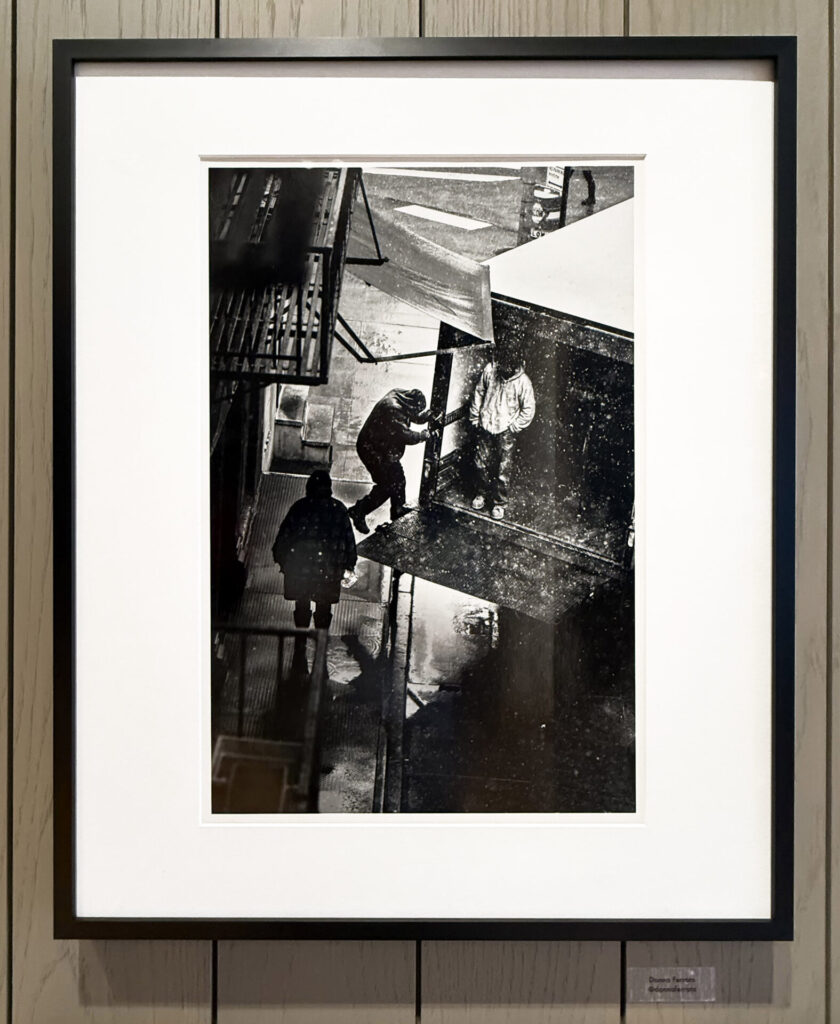
Image: ©Donna Ferrato, DSI Digital Silver Print® Fiber at the Leica Store Meatpacking District NYC
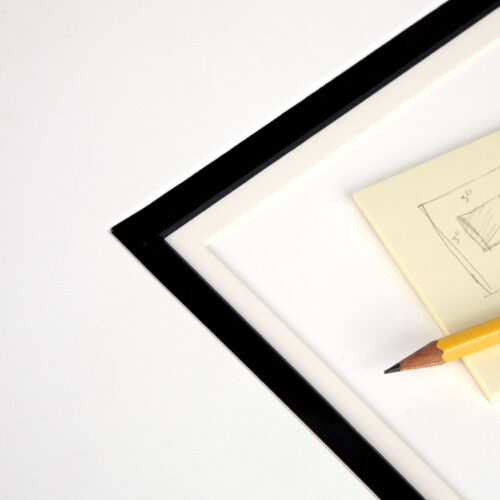
4 Ply Mat Board
- 100% cotton rag construction
- Meets F.A.T.G. museum conservation standards
- Environmentally conscious – cotton
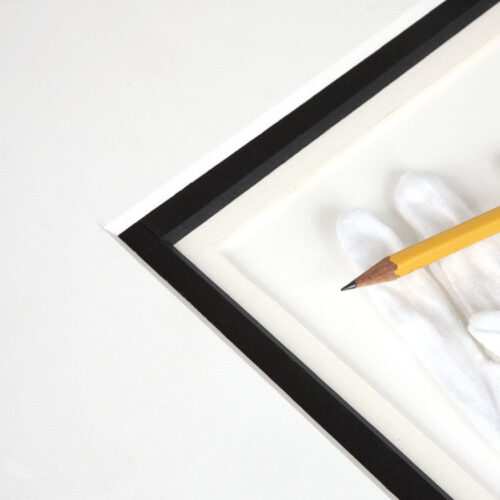
8 Ply Mat Board
- Extra thickness for premium presentation and larger prints
- 100% cotton rag construction
- Meets F.A.T.G. museum conservation standards
- Ideal for larger prints and high-end framing
Our Matting Process
Your matted image is mounted to acid-free foam board using archival museum photo corners, ensuring:
- Complete reversibility (no permanent adhesion to artwork)
- Long-term preservation
- Professional presentation
- Museum-standard conservation
Custom Matting Options
- Custom mat colors available
- Multiple window cuts
- Specialty shapes and sizes
- Conservation mounting techniques
- Dry mounting available upon request
Should You Mat Your Photo Prints?
The decision to mat a photograph is part practical, part aesthetic — and entirely personal. Here we’re talking specifically about archival window mats, like those offered at Digital Silver Imaging, used over a print mounted to archival board.
The Practical Case for Matting
A mat creates physical distance between the print and the acrylic or glass in the frame. This allows the print to breathe, prevents it from adhering to the glazing in humid conditions, and protects the surface over time. A mat also offers flexibility — it can make an image fit an existing frame you’re repurposing or one purchased off the shelf, opening up a wider range of framing options without custom work.
The Aesthetic Case for Matting
The visual reasons for matting are just as compelling. A mat separates the image from the wall, giving it room to be seen on its own terms. It creates breathing room between images or other objects in a grouping. Darker or smaller prints especially benefit from a window mat, drawing the viewer in and focusing attention. More broadly, a matted print makes a quiet but confident statement — of quality, of care, of intent. It is the traditional language of museums and galleries for good reason.
So, Should You Mat Your Prints?
There is no single right answer. Consider the intention behind the photograph, the environment where it will be displayed, and the statement you want your imagery to make. Let those three things guide you, and you won’t go wrong.