• Skip to primary navigation
  • Skip to main content
  • Skip to primary sidebar
  • Skip to footer
Digital Silver Imaging Logo

Digitalsilverimaging

The Fine Art of Printing in a Digital World

  • Order Now
    • Direct-to-Print
    • Value Prints
    • Custom Print Upload
  • Prints
    • DSI Digital Silver Prints®
    • Inkjet/Giclée Prints
    • Direct-to-Print Service
    • Value Prints
    • Try Us - Print Sample Promotion
    • Aluma Mounts
  • Digitize
    • Scanning & Retouching Services
    • Art Reproduction & Giclee Printing
  • Frame & Finish
    • Print Mounting
    • Print Matting
    • Framing
    • Print Hangers
  • More
    • Consulting and Curation
    • About DSI
    • The DSI Team
    • DSI Blog
    • Frequently Asked Questions
    • DSI Swag
    • The Unbound Portfolio®
    • Close Out
  • Contact
  • Search

Uncategorized

How to Create an Archive of your Creative Work

June 8, 2023 by Andrea

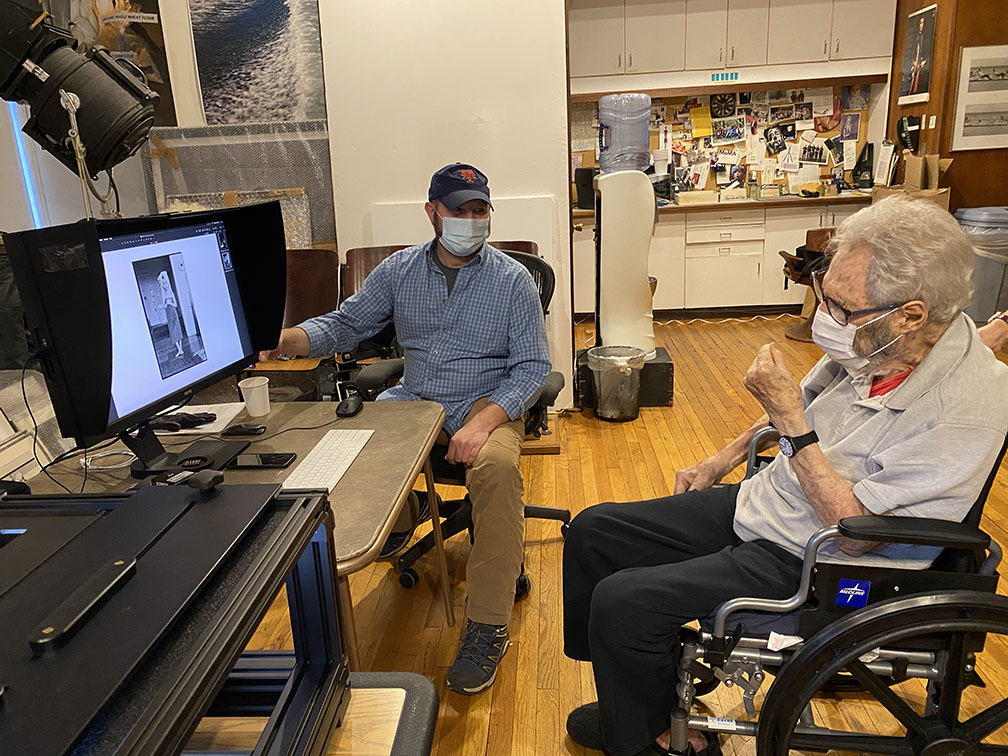
Scott Nidermaier and Elliot Erwitt review a digitally captured image
DSI’s Scott Nidermaier and Elliot Erwitt review digital captures of his archive.

Create an archive of your creative work – Organizing and digitizing your art doesn’t need to be a daunting task. By following some simple steps this process becomes easily achievable. Most artists/photographers have had the experience of looking at the masses of work produced over a career and wondered where to begin? This post will answer that question with an easy process.

As a creator of images a good exercise is to ask yourself how would I characterize my most important work? Was my body of work created primarily on an assignment basis, like an editorial photographer? Am I a fine artist that created work for exhibition and sale? Am I documentarian whose work is centered around a theme or story? By the way you could also be the documentarian of your family or organization. 

The process of self identifying who you are as an artist/photographer will greatly assist you in the editing process. For example, if you are a fine art photographer that has an extensive body of black and white portrait photography you can easily eliminate all those color slides from your trip to Yosemite. Start by selecting work for your archive that is closest to the core of how you identify yourself as an artist/photographer.

The key is to start the archiving process with a clearly defined purpose. In the previous example those vacation slides  didn’t make the edit. However they maybe included in a smaller archive you create later specifically for your own edification, but for now stick to primary objective and ignore the rest.

The Steps

1. Make a Schedule with Deadlines

Get out the calendar and set up concrete dates. Just saying that you are going to devote a day, a week, or some weekends won’t get it done. Be specific and set a date for specific goals.  For example: collect all materials in one location by June 3, compile best materials by June 22, set up appointment for digitization with Digital Silver Imaging by June 23, add supporting materials to existing work to be digitized by July 12, etc. Don’t get side tracked. You need to resist the temptation to make this a stroll down memory lane. You have a job to do, now get going.

2. The Best First

Begin with your best work. Start by Identifying the film and any prints of that work.  Why the prints? The print maybe the most archival medium in your archive. The print also shows how you interpreted the image. This even applies to an image that was created digitally.

3. Series and Stories

Identify the work by story, project, body of work. For example if you are a journalist, identify the stories you worked on and start with the most important (as you perceive it) and don’t neglect supporting images or documents. For the fine artist use the same approach. For example if your fine art work has had thematic connections or subjects use that as a starting point. 

4. You Don’t Need to Archive Everything

We are awash in images. Your archive does not need to have every analog asset digitized (see step 2). By all means make sure that your film and art are properly stored but making selections is key to the process. If you are a commercial artist quickly put aside jobs you completed to pay the bills.

Photographers use their cameras as a way to see the world so most shoot continuously. Unless it is part of your best work, or an important project, skip over the images from family, trips, events that are not related to your best work. The exception is an archive created specifically to document your family, even in this case you do not need to archive 20 images from that family picnic in 1972.

Documentation, Keywords, Metadata

Trying to complete all the documentation before you begin the digitization process is a monumental mistake in most cases. Film is not the most archival medium, and even black and white film often starts to deteriorate in as little as a decade. You can always add the documentation, keywords, and metadata after the film, prints and artwork have been digitized.

The discussion of documentation can fill volumes. Again consider what is the most important and relevant information in relation to the nature of your archive. The one thing that is always required is a creation date and a title. A title can be as simple as a single name or a dozen or more identifying words. 

Keywords and metadata not only identify your digital files but they also make your archive searchable. These issues become very important if you plan on selling images online and you need a large searchable archive as stock photography. Included below is a link to an article on understanding metadata to continue your research further.

The bottom line is digitize first, add data second. Included with this post are some useful links including the Photographic Information Record Form or PIR. This is a standard form that many museums and photo archives use to provide background and historical data on an image. The PIR is in PDF format so it can be completed and stored digitally with your archive.

Storing Your Digitized Archive

The one thing you can count on is that your hard drive will eventually fail. That is why it is essential that your archive be replicated and stored in at least two geographically separate locations. In many cases it is also useful to consider an online storage solution in addition to your hard drives. 

Companies like Drawbridge Digital offer sophisticated storage and access solutions for digital archives. A provider like Drawbridge Digital can make your archive searchable, provide access permission, and redundant backups. Even simple cloud storage is better than no off-site storage at all.

Summary

Like any task if you break it down into reasonable steps it becomes achievable. The caveat is don’t delay! You can always add more to your archive once you’ve digitized your best work. If you want more information on the digitization process please watch our video and don’t hesitate to contact us with your questions.

Useful Links

Photographic Information Record Form (PIR)

https://www.culturalheritage.org/membership/groups-and-networks/photographic-materials-group/publications/photographic-information-record

Drawbridge Digital

https://drawbridgedigital.com/

Understanding Metadata for Photographers
https://www.pixpa.com/blog/photo-metadata

Appraiser’s Association (Find an appraiser to value your archive)
https://www.appraisersassociation.org/index.cfm

Help spread the word!

Filed Under: Uncategorized Tagged With: archive, create an archive, digitization

Digitization & Scanning Methods Compared

March 11, 2022 by Andrea

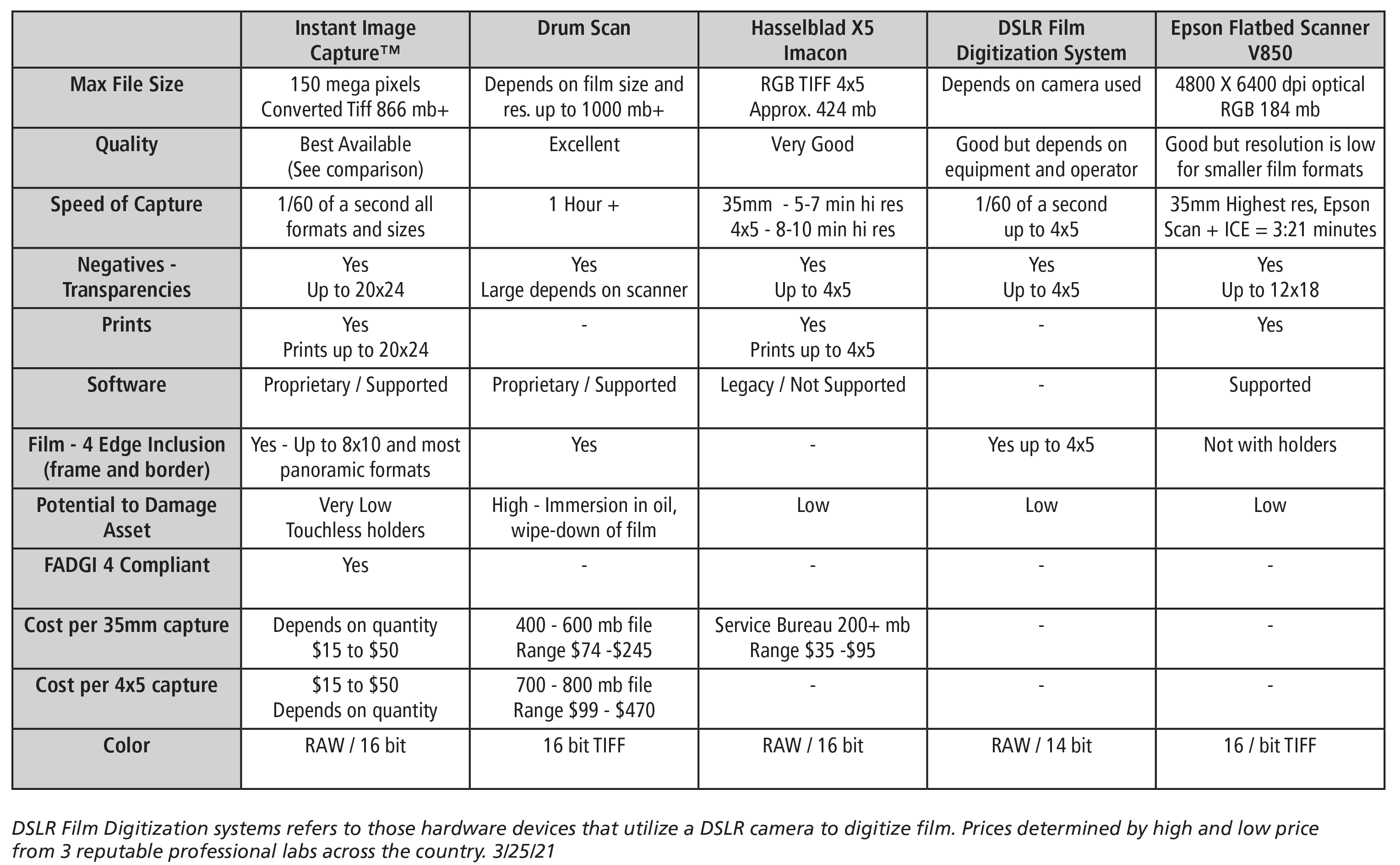
In this post we have created a chart that compares existing and currently supported devices* to our state-of-the-art digitization service. When digitizing your film and prints you have a variety of options. There are many legacy system that do an adequate job, but all are slow and require older software and older computers to run them.

Digitization comparison table

*The Hasselblad X5 Film Scanner is no longer supported by any manufacturer. The X5 is included here as it is still used commercially.

Help spread the word!

Filed Under: Uncategorized Tagged With: digitization chart, digitization methods

Art Reproduction & Giclée Prints

October 27, 2020 by Andrea

Mention this ad and receive 10% Off your first Art Reproduction order. Use Promo Code ANE2020. This is a limited time offer.

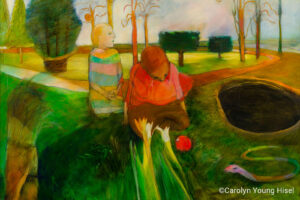
We approach art reproduction as a collaborative process. At Digital Silver Imaging we use the highest standards of image capture, color corrected workflow, and archival print reproduction. We utilize the best digital capture device for the job. Our primary art reproduction tool is the Digital Heritage System, the same system employed by MOMA, The National Gallery of Art, and the Denver Art Museum just to name a few. However, it takes more than sophisticated equipment, or a giant digital file, to make a good reproduction. Duplicating art takes a high level of craft and an understanding of the mediums used. No print will ever duplicate an original painting, drawing or mixed media work, but we strive to achieve a visual and perceptual match with every print.

©Carolyn Young Hisel, website: cyhisel.com

Our Art Reproduction Process

  • Your artwork is digitally photographed to accurately reproduce color and texture.
  • All files are color balanced.
  • Proof print included with Premium Reproduction service.
  • 10% Off Prints with Premium reproduction service.

Fine Art Inkjet Prints

  • Our Inkjet/Giclée* prints are made on the highest quality pigment printers.
  • You can choose from a variety of fine art paper stocks and surfaces.
  • We guarantee archival quality.
  • Limited editions,  serialized holographic labels, and certificates of authenticity are available.
  • For more information on our printing see Custom Color Inkjet Pricing.


Matting, mounting and framing is available at reasonable prices. We can also custom build a portfolio box or case for your edition. Once complete we can ship your prints directly to a client in the next state or around the world.

Basic Capture Premium Capture
Flat artwork up to 20x24"For dimensional artwork requiring custom lighting or pieces over 20x24"
Original size20x24” Max Dimension24” Max Dimension30” Max Dimension40" Max Dimension48" Max DimensionOver 48”
Pricing$75 Each$150 each$195 each$250 each$300 eachCustom
3 to 4$50 Each$125 each$165 each$200 each$250 eachCustom
5 to 10 (call for 10+)$45 Each$115 each$150 Each$175 Each$225 eachCustom
Upon review prices may change depending on artwork surface and materials. Basic Capture multiple piece price applies to works of a similar size.

File Delivery

  • Hi-res files transferred to thumb/flash drive provided by customer – No Charge
  • Hi-res files transferred via electronic upload free
  • Hi-res files provided on DSI 8gb thumb drive $10

Contact or call us at 617 489-0035 for more information about our fine art reproduction services.

*Giclée is French for “splash” or “squirt.” A Giclée print is simply an inkjet print. There is no agency or standard that makes a print a true Giclée. We use the term “inkjet” because we believe it is a more honest way of representing our printing method. We are one of the few labs in the North East that is a Hahnemühle Certified Studio and a Canson Infinity Certified Print Lab. This means our staff, equipment, and printing practices meet rigorous professional quality standards.

Help spread the word!

Filed Under: Uncategorized

Doug Menuez and Sandro Miller on Staying Relevant as Professional Photographers

June 27, 2019 by Andrea

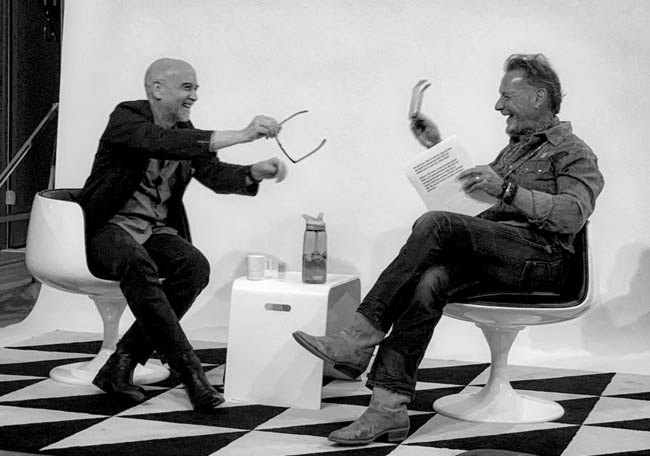
Doug Menuez & Sandro Miller ©Doug Menuez's Leica
Doug Menuez & Sandro Miller ©Doug Menuez’s Leica

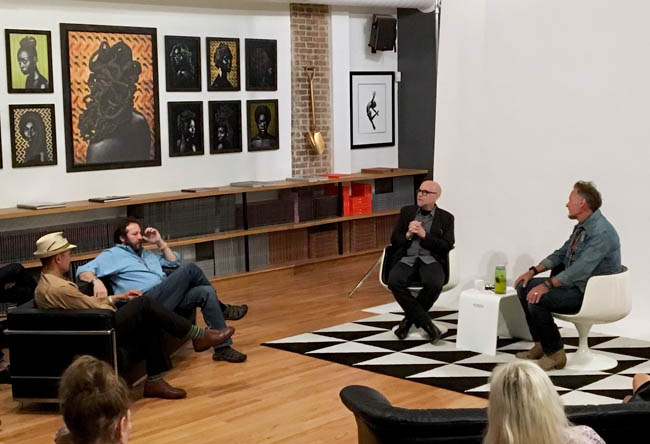
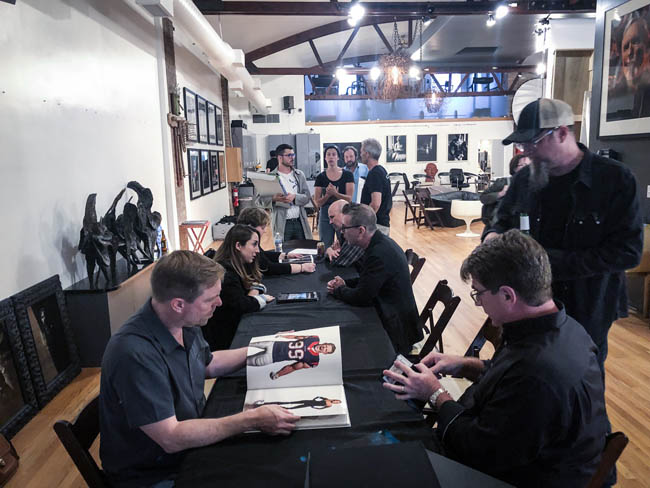
Doug Menuez and Sandro Miller continue to be creative, successful, and relevant after almost 40 years in the business of photography. On June  22, 2019, Doug Menuez and Sandro Miller generously shared volumes of valuable and entertaining information in an event hosted by Digital Silver Imaging and PhotoPolitic™. About 30 photographers and industry professionals gathered in Sandro’s beautiful Chicago studio. Also present was special guest Jim Stallman Senior VP and Creative Director of Leo Burnett and four industry movers and shakers, Patrick Rynell, EVP/ECD, Ainara Del Valle, ACD/AD, Jennifer Meinders, ACD/AD, Jon Lueken, Sr. Producer.

So how do these successful photographers define “The Art and Science of Staying Relevant?” The take away is condensed into these few brief paragraphs.

Stay Creative

Personal Projects | Pro Bono Work | Fine Art | Get out of your comfort zone

Both Doug Menuez and Sandro Miller pursue personal work as part of their work/life balance. Doug believes that working with nonprofit organizations can give an editorial photographer like himself the ability to photograph new and interesting subjects with fewer limitations. Doug has also published 4 books, most notably Fearless Genius, his unprecedented documentation of the digital revolution. Fearless Genius was #1 on the Amazon Bestseller list and it continues to provide exposure as a multimedia project, film, and a traveling exhibition of prints all produced by Digital Silver Imaging. 

Sandro Miller’s expansive personal work often starts with a project that becomes an entire large format fine art book. Projects like the one he did with John Malkovich or his trips to Cuba became books and many of the images end up as fine art prints for gallery sales and exhibitions. Although Sandro has a distinct style, and can be considered a portraitist, he is constantly finding new paths and subjects for his work.

Sandro’s spacious studio ©Andrea Zocchi

Stay Organized

Make a business plan | Strategically target your customers

According to Doug Menuez what put him on the path to success was a solid business plan and the discipline to stick to it. Both photographers emphasized that having the business acumen and the right people in that field was invaluable. Sandro Miller stressed focusing your promotional efforts on a manageable group of targeted clients/agencies and galleries. Casting too broad a net often doesn’t work and can result in work the photographer is not excited about executing. Miller stated that he focuses on about 20 potential customers at a time.

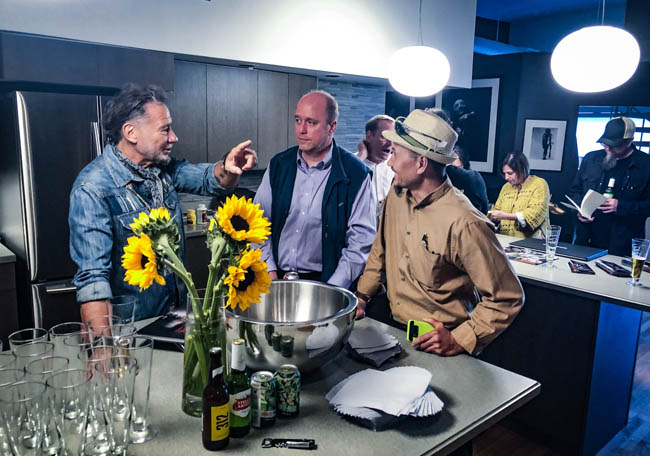
Refreshments ©Doug Menuez

Stay Above the Crowd

Use prints and printed media to stand out

The consensus was that regular posts on social media were necessary but didn’t necessarily get you work. Doug said that one of his most successful and expensive promotions was his “F…You Book.” It was a portfolio of work he loved (not work that everyone advised him to show, that’s where the “F…You” comes in). He said that this piece got him more and better jobs than any other promotions.

The advice from Sandro was to send a signed print, as he said, “People just can’t throw away a signed print.” He also uses his books as a way to rekindle art director and ad agency interest in what he’s doing. Both photographers have an active fine art presence, with gallery representation and the print sales supplementing their income and increasing their exposure.

Jim Stallman Senior VP and Creative Director of Leo Burnett echoed what both photographers said. He underlined the point that as a creative director he is overwhelmed with emails and electronic communications. His advice was to do something tangible that shows your own creative genius, something that represents you, not what you think someone wants to see.

Stay Informed

Research your customers | Know the brand | Be prepared for the shoot

Before you start a job, or start to promote your work to a client, know what they do. In editorial, documentary, or product work the research is the first step. Sandro stated that he might shoot for an entire week before the actual photo session is scheduled. In the preceding week he will test lighting, concepts and other aspects before the client arrives in studio. Dig deep, acquire knowledge and be prepared.

Portfolio reviews were an optional component ©Doug Menuez

Stay Personal and Connected

Pick up the phone | Meet people | Attend Events

Doug Menuez, Sandro Miller, and Jim Stallman all agreed that photography is all about making personal connections and keeping them fresh. Don’t send an email if you can call the person by phone. Expanding your community in person makes you memorable. Knowing that you can work with a person and they can work with you makes all the difference. 

This also extends to the photo shoot itself. Don’t just start blasting away. Talk to your subject. Again both photographers emphasized the pre-shoot preparation. If you know your subject you can make conversation and the shoot will be more successful.

We hope that PhotoPolitic™, Doug Menuez and Sandro Miller will choose to repeat this event in the future. It might be the best $189 dollars that you can spend on your career. We’d like to thank Doug Menuez, Sandro Miller and Jim Stallman as well as Chris Armstrong from PhotoPolitic™ for asking us to play a small part. The entire day was videoed and is available to PhotoPolitic™ members. To stay informed about future events follow us, Digital Silver Imaging and PhotoPolitic™ on social media.

Help spread the word!

Filed Under: Customer Profile, DSI-News, General News, News, Uncategorized Tagged With: Doug Menuez, Jim Stallman, PhotoPolitic, Sandro Miller

DSI Portfolio Awards – 2017

April 11, 2018 by Andrea

©Dylan Everett 2018
©Dylan Everett 2018

The DSI Portfolio Awards is a shared platform providing three recent graduates of photography with financial assistance in printing a professional portfolio. This year’s awardees share a strikingly sophisticated and nuanced eye with a keen awareness of their concept and its context. Collectively each crystalizes their unique finds of specific investigations. Their discerning and original choice of final output formats complement and underscore their work’s intent. My appreciation to my fellow jurors, Debra Clomp Ching and Stephen Marc for their thoughtful and engaged contributions to the selection process.

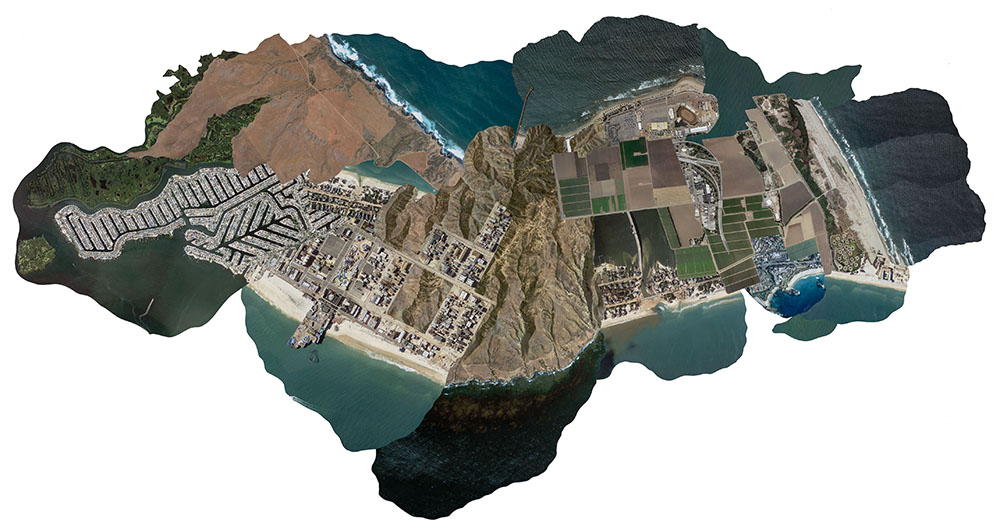
Dylan Everett recently graduated from Brown University and is now completing an MFA from Rhode Island School of Design. Structural Photography, is his series of aerial topographies. Seductively these engaging abstractions are at first a pleasing amalgam of color, form and texture. With time the viewer comprehends the actual residential housing mazes, agricultural industries and strip-mines within the capture. Everett concretizes our complicity in the development of this humanly altered landscape. Stephen reflects on this compelling work; “A strong and unique concept, containing a mystery, consistent vision, and bold use of white space.”

©Michelle Rogers Pritzl 2018

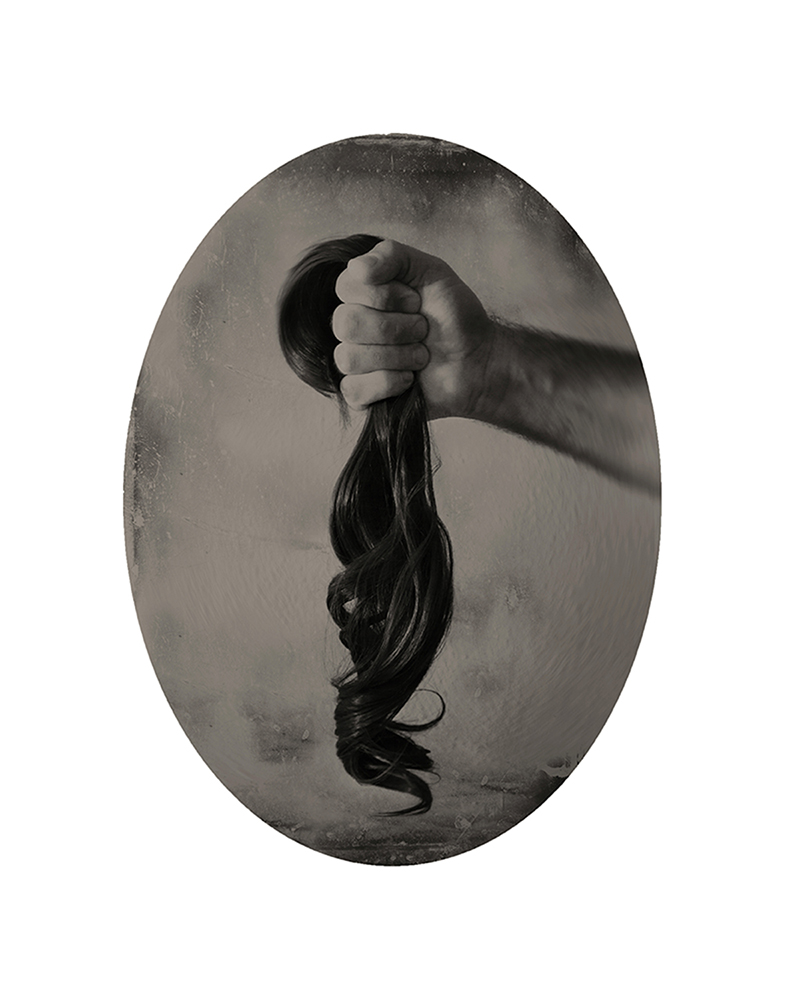
Michelle Rogers Prtizl has studied photography and earned three art degrees, most recently as a MFA graduate of Lesley University College of Art and Design. She is widely exhibited and known for her use of alternate and historical processes. In Not Waving But Drowning, whose title references Stevie Smith’s poem of the same name, Pritzl explores Fundamentalist Christianity’s tenets that serve to control and manipulate women. Her image titles reference Kate Chopin’sThe Awakening, and are a tribute to the artist’s autobiographical freedom from this restrictive belief system. The combination of the collodion process and an oval frame in collaboration with contemporary digital media practices mirrors her conscious choice to evolve, taking some aspects of the past while exercising her self-determination and embrace of the modern.

It was an insightful honor being one of the jurors for the DSI competition, and congratulations to the three award recipients. The process was challenging and rewarding due to the range and depth of the images submitted. I wish all the best to each of the entrants, and I hope that our paths cross again. – Stephen Marc

©Emily Schiffer 2018

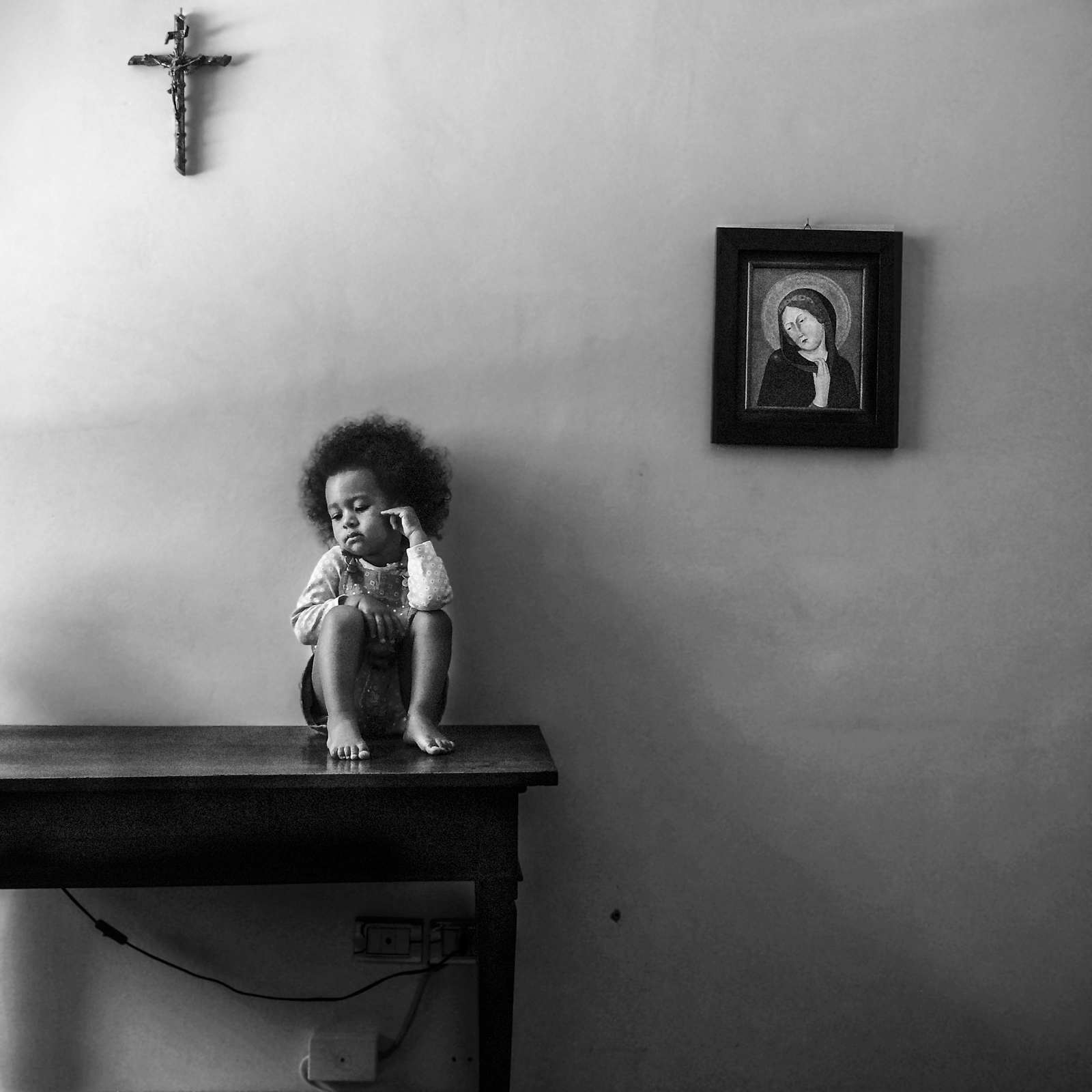
Emily Schiffer is a mixed media artist and photographer interested in art’s ability to initiate community engagement and foster social change. Kin is an intimate portrayal of family life. These unposed portraits capture moments in her interracial and cross-culturally blended family. Her images hold a space between documentary narrative and documenting feeling. Stephen’s comments: “Each could stand alone but tie in an intimate narrative. I was impressed with these documentary style portraits because of the alternating interactions, environmental details, and dynamic lighting that project a mood of domestic warmth.”

J. Sybylla Smith


Postscript

Award winners will receive $1250 in printing services from Digital Silver Imaging. The Jurors and Digital Silver Imaging would like to thank everyone who submitted work. Although we had our lowest number of entries for the 2017 award, we feel that the quality of the work was exceptional. In this slideshow, we’d like to recognize a few of the photographers who made excellent work, but unfortunately, did not win

[photospace_res]

Help spread the word!

Filed Under: DSI-News, Uncategorized

Gum Bichromate & Ziatype Workshops

July 10, 2017 by Digital Silver Imaging

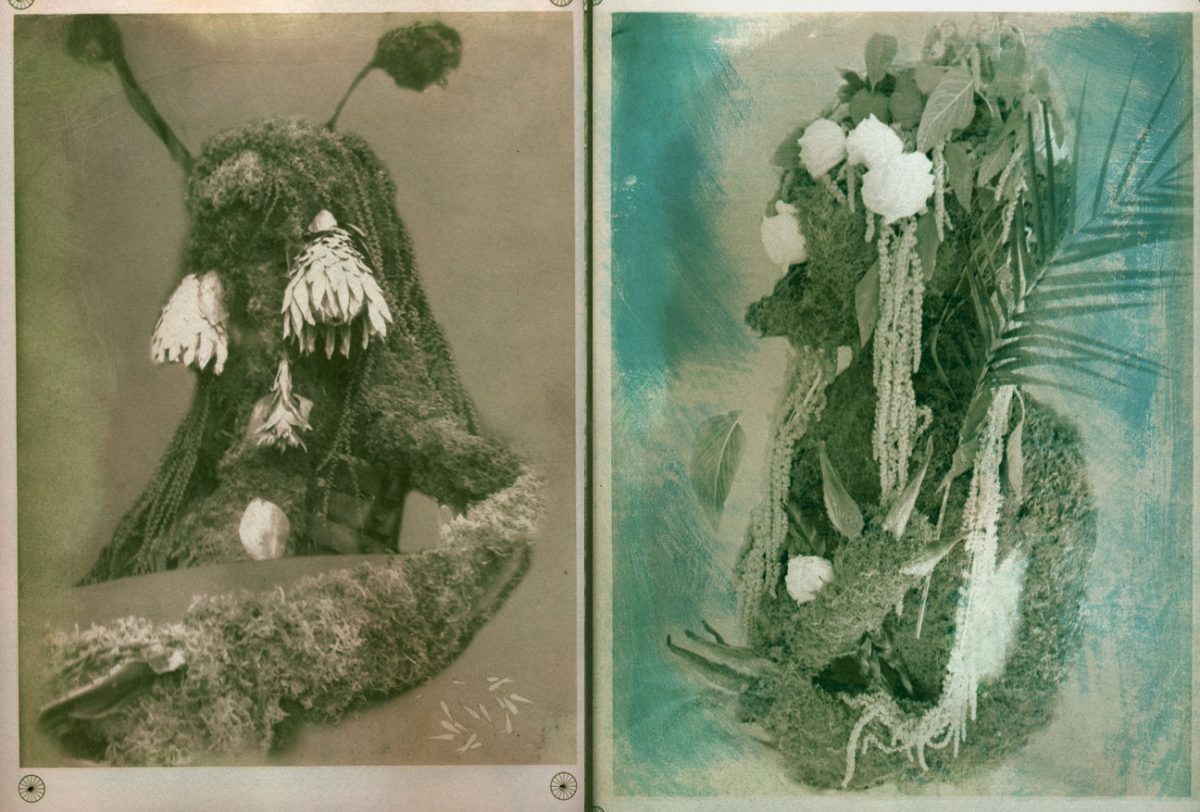
Two Gum Bichromate Images ©Anne Eder

Gum Bichromate Workshop

Gum bichromate is a 19th century photographic process using gum arabic, photo-sensitive dichromate, and watercolor pigments to create monochromatic, duotone, or full color images. The results are each unique and 100% archival. This workshop will take participants through the steps from generating large format color separation negatives to final printing. All the materials needed for this workshop will be provided.

Date: Saturday July 29, 2017
Time: 10:00-6:00 with a break for lunch
Place: Digital Silver Imaging, 9 Brighton Street, Belmont, MA
Fee: 249.00

GB Workshop

Student Discount: Currently enrolled students can receive a 10% discount. Use promo code: Student10 at checkout. You will be asked to present your valid student ID at the workshop, if you do not have a valid ID you will be charged the full $249.

Images produced at a previous Ziatype Workshop

Ziatype Workshop

Ziatypes have the look of platinum/palladium prints but are not as difficult or expensive to produce. This beautiful alternative processes maybe the perfect match for your photographic imagery. The Ziatype Workshop is for beginners and photographers with basic knowledge of the ziatype process. Expert instructor, Anne Eder, will take participants through the complete process of making ziatypes from digital image to finished ziatype print.

Anne will step participants through the entire process, starting with making a contact negative on an inkjet printer, coating of light sensitive paper, exposure with sunlight, and the final archival wash.

During the course of this day-long workshop participants will focus on:
• Perfecting negative conversion curves for better print results
• Creating a negative to express your vision
• Understanding ziatype chemistry
• Creating additional color and tone in your ziatype

If you are curious about the advantages of ziatype printing here is a brief list:
• Ziatypes utilize a printing out process (POP), images can be evaluated as they print, resulting in far fewer underexposed or overexposed prints.
• Greater contrast control without graining
• Greater paper acceptance, prints well on most papers.
• Greater color control. You can “dial in” various shades of brown to red brown, purple to neutral grays.
• No developer needed.
• Excellent blacks (dmax)

All materials needed will be provided, prints will be made on Hahnmühle Platinum Rag paper.  Participants need to bring 3 to 4 images on a flash drive, CD, or their laptop. Images should have good tonal scale in both the highlight and shadow areas. Two negatives will be made, one larger and one smaller, so a larger size file is better as it can always be reduced without image degradation. Files should be 300ppi, actual size. Participants will be able to keep, the prints , negatives, and custom curves made during the workshop.

Date: Saturday August 19, 2017
Time: 10:00-6:00 with a break for lunch
Place: Digital Silver Imaging, 9 Brighton Street, Belmont, MA
Fee: 249.00
Zia Workshop
Student Discount: Currently enrolled students can receive a 10% discount. Use promo code: Student10 at checkout. You will be asked to present your valid student ID at the workshop, if you do not have a valid ID you will be charged the full $249.

Instructor Bio: Anne Eder, holds a masters degree in Photography and Integrated Media, and has studied with Christopher James, author of the Book of Alternative Processes. Her gum bichromate images and studio practice are featured in Gum Printing: A Step-By-Step Manual Highlighting Artists And Their Creative Practiceby Christina Z. Anderson, published by Focal Press/Routledge 2017. Her work has been exhibited internationally and is held in both public and private collections.

Help spread the word!

Filed Under: Events, General News, Uncategorized, Workshops Tagged With: Anne Eder|gum bichromate|Ziatype

  • « Go to Previous Page
  • Page 1
  • Page 2
  • Page 3
  • Page 4
  • Interim pages omitted …
  • Page 28
  • Go to Next Page »

Primary Sidebar

Categories

  • Case Studies (9)
  • Customer Profile (14)
  • DSI Product Information (11)
  • DSI-News (14)
  • Events (29)
  • General News (37)
  • General News>Friends of Digital Silver Imaging (4)
  • Interview (3)
  • News (57)
  • Promotion (13)
  • Reviews (3)
  • The Griffin Museum at Digital Silver Imaging (6)
  • Uncategorized (167)
  • Workshops (35)
  • z15 (1)

Digital Silver Imaging

9 Brighton Street
Belmont, MA 02478
617-489-0035
email us
map and directions
shipping info
Hours: 9–5:30 Monday–Friday

  • Facebook
  • Instagram
  • RSS
  • Twitter
  • YouTube

Footer

Digital Silver Imaging

9 Brighton Street
Belmont, MA 02478
617-489-0035
email us
map and directions
shipping info
Hours: 9–5:30 Monday–Friday

Sign Up for DSI-eNews

We'll send you a discount code you can use in your first order and occasional emails to inform you of new services, promotions and events.

  • This field is for validation purposes and should be left unchanged.

Follow DSI

  • Facebook
  • Instagram
  • RSS
  • YouTube

All content © 2026 Digital Silver Imaging · Privacy Policy · powered by WordPress · web design by smallfish-design