• Skip to primary navigation
  • Skip to main content
  • Skip to primary sidebar
  • Skip to footer
Digital Silver Imaging Logo

Digitalsilverimaging

The Fine Art of Printing in a Digital World

  • Order Now
    • Direct-to-Print
    • Value Prints
    • Custom Print Upload
  • Prints
    • DSI Digital Silver Prints
    • Custom Inkjet Prints
    • Direct-to-Print Service
    • Value Prints
    • Try Us - Print Sample Promotion
    • Aluma Mounts
  • Digitize
    • Digitization and Scanning
    • Art Reproduction & Giclee Printing
  • Frame & Finish
    • Print Mounting
    • Print Matting
    • Framing
    • Aluminum Print Hangers
    • Wood Print Hangers
  • More
    • Consulting and Curation
    • About DSI
    • The DSI Team
    • DSI Blog
    • Frequently Asked Questions
    • DSI Swag
    • The Unbound Portfolio®
    • Close Out
  • Contact
  • Search

DSI Blog

How Long Will My Print Last?

February 27, 2018 by Andrea

The question  How long will my print last? is one that we at Digital Silver Imaging get asked a lot. How long a print will last? is an important question because as a fine art lab many of the prints we make end up in museums, galleries and private collections. We need to provide our customers with prints that are archival and will retain the fidelity of the image for the longest possible time.

The Research

To answer the How long will my print last? question we’ve done our best research and compiled data from reputable sources like Wilhelm Research, University of Illinois, and the Getty. We also took information published by Fujifilm and Kodak on their own products as well.  The chart we’ve created compares the archival life of our DSI Digital Silver Prints and our Museum Quality Pigment Inkjet Prints to other popular printing media, most notably Kodak Endura and Fuji Crystal Archive prints, home and office dye-based inkjet printers, and HP Indigo Prints which are primarily used to produce photo books. In our chart, link below, we’ve also compared the life of the print when stored and displayed in different conditions.

The Method

Henry Wilhelm
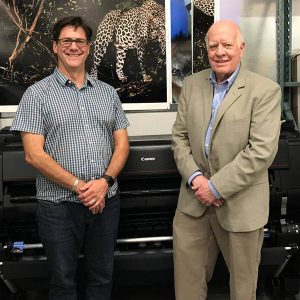
Eric Luden and Henry Wilhelm in the lab at Digital Silver Imaging.

The only way to accurately asses the archival life of specific type of print is through an accelerated aging test. These tests seek to replicate the effects of a variety of environmental factors on a print over time. For our chart we have primarily drawn on data provided by Wilhelm Research as it is produced with the highest scientific standards, and Henry Wilhelm has been at the forefront of this research for decades. The data sited is all public and footnoted in the chart accompanying this article and on this post.

Please note that our DSI Digital Silver Prints® are almost identical to traditional silver gelatin /silver halide black & white photo prints. In fact the Ilford Galerie Digital Paper that we use in our trademark process is a traditional black & white silver halide black & white photo paper. The only substantive difference is that the Ilford Digital Galerie Paper we use is panchromatic.

We found no accelerated aging data on traditional silver halide/silver gelatin black & white prints. However as this product has been in continuous use for 140 years and there are many examples of those prints in existence, the lack of accelerated aging testing seems inconsequential as actual data exists.

What about “Big Box’” Photo Prints and Photo Services like Shutterfly

Most big box retailers either don’t specify what the media and/or type of print they are providing. Some use mini labs made by companies like Noritsu. These mini labs are usually Digital C-Prints (Kodak Endura or Fuji Crystal Archive Paper) and operation and maintenance of these units depends on the persons in the location running the machine.  A variety of other methods are also employed. Not an option that inspires much confidence for a photographer serious about quality.

At the time of this posting, photo services websites like Shutterfly make their “paper prints” using Digital C-Print equipment on Fuji Crystal Archive paper. Websites that offer a variety of services, websites, storage, prints, like Smug Mug also make Digital C-Prints, because they contract with several labs those could be on either Endura of Crystal Archive.

What is the best looking print?

In this post we are doing our very best not to be subjective and “best” is a subjective term. When measuring color gamut it is clear, color prints produced on a professional inkjet printer like the Canon Prograf 6000, 4000 and 1000 used by Digital Silver Imaging can reproduce a wider range of colors than a digital C-Print on Kodak Endura or Fuji Crystal Archive. However inkjet prints are not, in the strict technical sense, continuous tone. Continuous ton prints have a different look  than inkjet or transfer media.

Conversely a DSI Digital Silver Print is a continuous tone true black & white print. There are no dyes or ink in a DSI Digital Silver Print and the image is made of silver salts that have been exposed to light. Both types of prints have a distinct look. However, the archival life and stability of both the DSI Digital Silver Print and our Museum Quality Pigment Inkjet Prints make them the most archival print available for black & white and color prints.

So How Long Will My Print Last?

Two types of prints standout as far as longevity, a photo print made with either professional brand name high quality pigment inks, and silver gelatin black & white prints. They show distinct advantages, especially when the print is intended for more than just dark storage. On display these types of prints will maintain their image fidelity much longer than either a Kodak Endura or Fuji Crystal Archive print, although the Fuji Crystal Archive print is far superior to the Kodak product. Professional high quality pigment prints also have the advantage that if you know what printer and ink is used, and the paper the image is printed on, you are virtually guaranteed that you are getting an archival product. A digital C Print depends on how well the equipment to process the print is maintained and the freshness and type of chemistry. HP Indigo prints are intended for mass production printing and do not meet the standards that a museum, gallery or collector should accept. Office and home inkjet prints are fine for documents but should not be used for photo printing.

What’s not included

At the time of this post we feel that there is not enough data to determine the archival life of professional quality dye sublimation prints, such as our Prints on Metal. From the quality of the pigments used, and the substrates they should be very stable but we ae waiting for more testing to be completed. In addition, we have not included Cibachrome prints as those products have not been manufactured in decades. Also not included are analog C Prints, those color prints produced in a darkroom. Analog C Prints should have an archival life similar to digital C prints as the basic paper technology is the same.

Print Permanence Chart

Print-Permanence-Chart-9-19

Sources
2.Wilhelm Research, The Permanence and care of analog and digital photographs – FotoCoservacion 2011, June 20-23, 2011 3. Deterioration risk as determined by the University of Illinois, https://psap.library.illinois.edu/collection-id-guide/photoprint 4. https://www.getty.edu/conservation/publications_resources/pdf_publications/pdf/atlas_silver_gelatin.pdf , Wilhelm Research – HP Indigo Digital Presses – Print and Photobook Page Permanence 5. & 6. A Survey of Print Permanence in 4×6-Inch Consumer Digital Print Market 2004-2007, www.wilhelm-research.com, http://www.wilhelm-research.com/Collected_Papers/The_Wilhelm_Research_Archives_Volume_1_Technnical_Publications_1968-2015_(v4.5_2015-02-15).pdf 7. http://imaging.kodakalaris.com/sites/prod/files/files/resources/paper-endura-techpub-e4070.pdf 7. http://imaging.kodakalaris.com/sites/prod/files/files/resources/paper-endura-techpub-e4070.pdf 8. Kodak uses different permanence testing standards than Wilhelm Research 9. ftp://ftp.hp.com/pub/printers/HP_Exstream/Shutterfly_4AA0-1195ENWrr.pdf, https://globenewswire.com/news-release/2017/08/16/1086575/0/en/HP-wins-five-year-Shutterfly-deal-accelerates-digital-print-momentum.html

Help spread the word!

Filed Under: Case Studies, General News Tagged With: archival, archival life, longevity

Why Shoot Film?

January 5, 2018 by Andrea

Film Processing - Coney Island Teenagers 1949 ©Harold Feinstein
Coney Island Teenagers 1949 ©Harold Feinstein

Why shoot film? With a new full frame digital camera hitting the market every couple of months, this is a good question. Photography has become a ubiquitous part of our lives with smart phones, iPads and Instagram. Arguably the ease and quality of producing the quotidian photographic image has also improved with the digital age, so what’s the appeal of the archaic image technology of film?

Film Forces You to Think

Ansel Adams stated that previsualization is, ”the ability to anticipate a finished image before making the exposure.” Shooting film makes the photographer think about exposure, composition and point of view before depressing the shutter release. In many ways film can make photography a more contemplative process. Slowing down and concentrating is both transformative and rewarding.

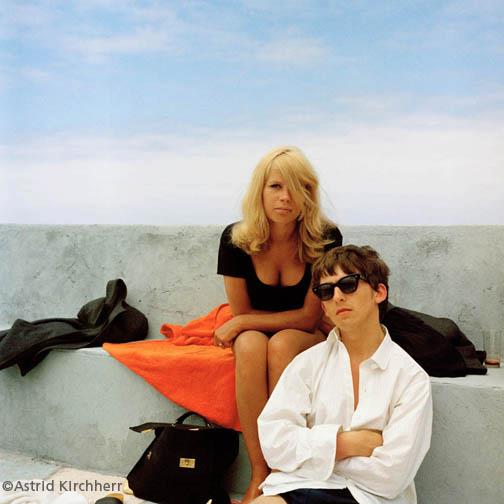
George Harrison & Astrid Kirchherr ©Astrid Kirchherr

Film is Archival

Film is a long lasting hard copy of your image. Unlike a digital file, one bad keystroke can’t delete your negative. Properly stored color negative film should last for decades and b&w is expected to last as long as 500 years if properly processed and stored. A good CD’s archival life is 25 years. And who knows what electronic media will be supported in the next 10 years.* BTW does anyone have a driver for a Jazz Drive that works with High Sierra?

Film Makes Big Beautiful Prints

A good scan of a negative or positive can make an amazing print. This analog/digital combo is truly a match made in heaven. We have had many projects where film was scanned and then printed as silver gelatin DSI Digital Silver Prints® or Museum Quality Color Inkjet Prints. To name just a few; Tod Papageorge – Studio 54, Michael “Nick” Nichols – Wild, Philadelphia Museum of Art, Anthony Hernandez – Retrospective San Francisco MOMA. Combining analog and digital processes makes creating editions and large high quality prints easier then in the past.

Film can be Economical

Many of us have at least one old film camera laying around. If you compare the cost of a full frame digital camera and lens with a used/free film camera the difference could pay for a lot of film and processing. This claim has to come with a caveat, I have a friend who “binge shoots” film. She says that for her film is “like crack!” She is currently looking for a 12 step program.

Film is Fun

The hands on nature of film, the “magic” of seeing your negatives for the first time, big sturdy cameras made of metal, wood and leather, using a mechanical device that maybe older than yourself, the randomness that can occur, all this makes film an experience that is rich and multifaceted. Film is fun!

Is film photography going away?

In a recent conversation with KEH Camera, they state that film camera sales remain strong and a substantial portion of their business. Both Ilford and Fuji Film report strong film sales. Shooting film has become hip, and millennials are the largest consumers of film. With all this evidence I think that film will be around for a little while longer.

Help spread the word!

Filed Under: DSI-News, General News Tagged With: Why shoot film

Gum Bichromate & Ziatype Workshops

July 10, 2017 by Digital Silver Imaging

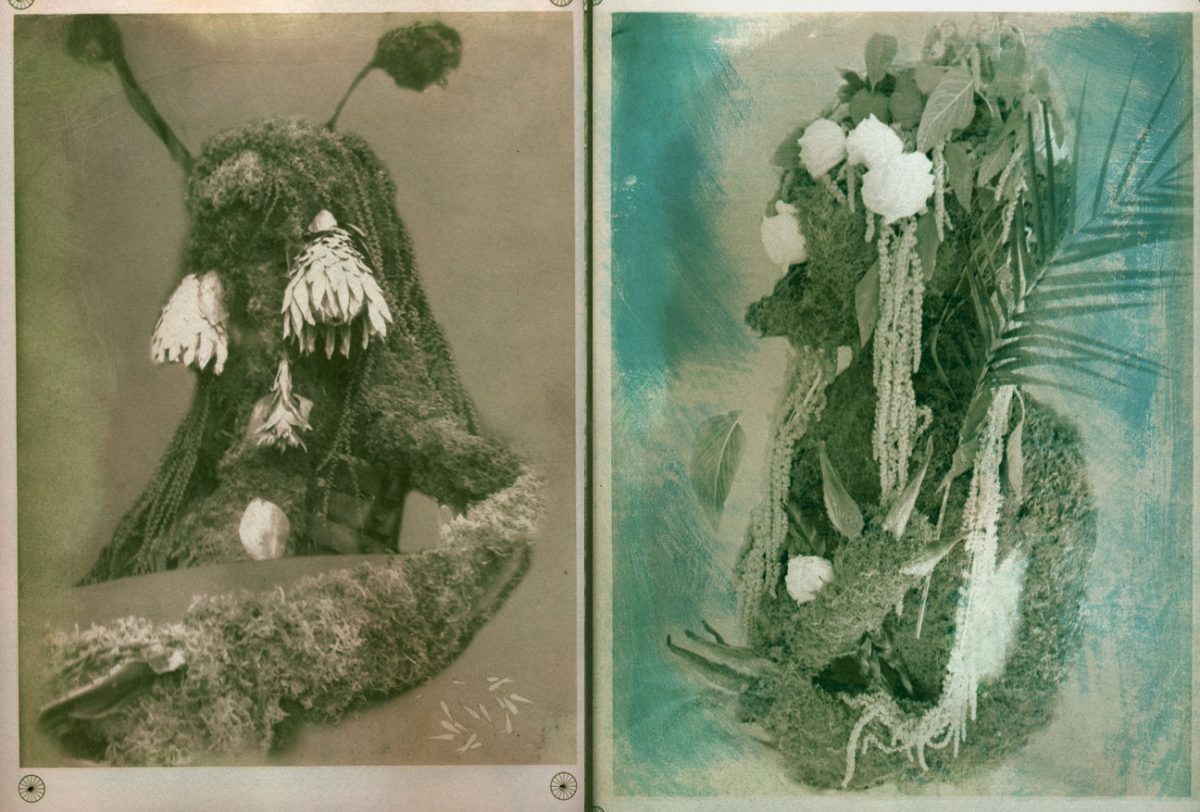
Two Gum Bichromate Images ©Anne Eder

Gum Bichromate Workshop

Gum bichromate is a 19th century photographic process using gum arabic, photo-sensitive dichromate, and watercolor pigments to create monochromatic, duotone, or full color images. The results are each unique and 100% archival. This workshop will take participants through the steps from generating large format color separation negatives to final printing. All the materials needed for this workshop will be provided.

Date: Saturday July 29, 2017
Time: 10:00-6:00 with a break for lunch
Place: Digital Silver Imaging, 9 Brighton Street, Belmont, MA
Fee: 249.00

GB Workshop

Student Discount: Currently enrolled students can receive a 10% discount. Use promo code: Student10 at checkout. You will be asked to present your valid student ID at the workshop, if you do not have a valid ID you will be charged the full $249.

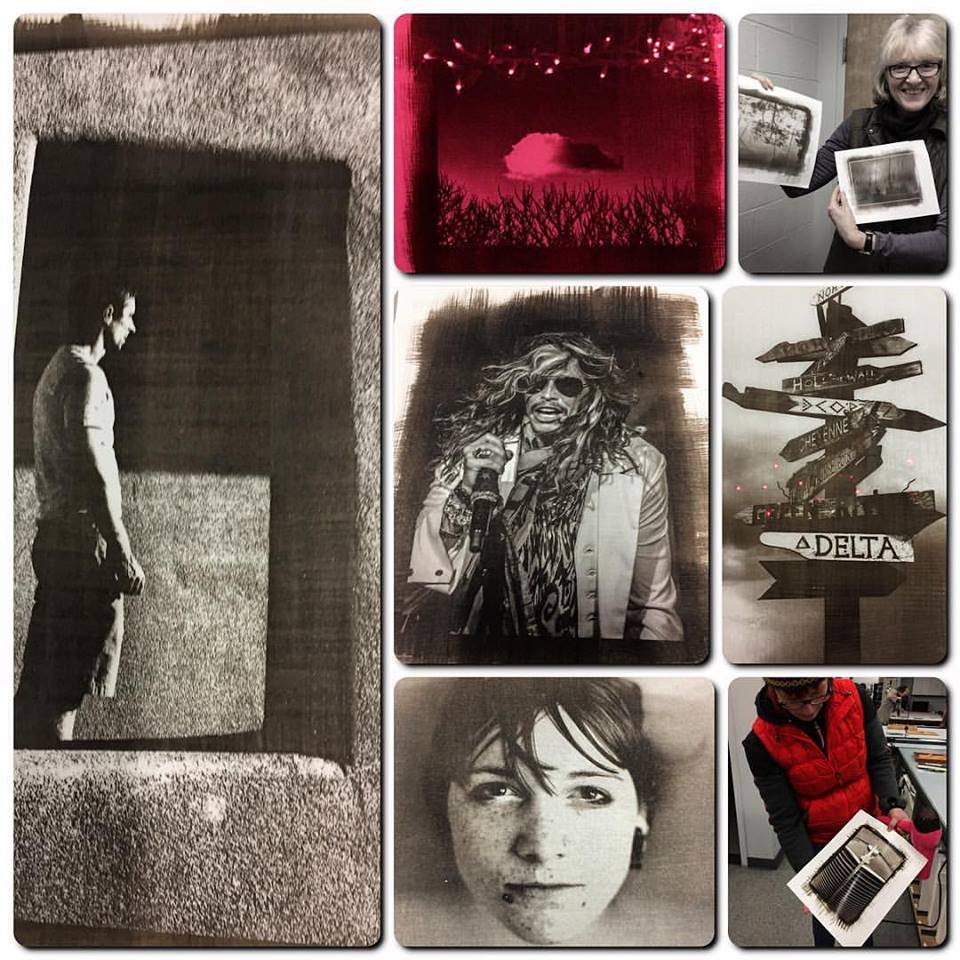
Images produced at a previous Ziatype Workshop

Ziatype Workshop

Ziatypes have the look of platinum/palladium prints but are not as difficult or expensive to produce. This beautiful alternative processes maybe the perfect match for your photographic imagery. The Ziatype Workshop is for beginners and photographers with basic knowledge of the ziatype process. Expert instructor, Anne Eder, will take participants through the complete process of making ziatypes from digital image to finished ziatype print.

Anne will step participants through the entire process, starting with making a contact negative on an inkjet printer, coating of light sensitive paper, exposure with sunlight, and the final archival wash.

During the course of this day-long workshop participants will focus on:
• Perfecting negative conversion curves for better print results
• Creating a negative to express your vision
• Understanding ziatype chemistry
• Creating additional color and tone in your ziatype

If you are curious about the advantages of ziatype printing here is a brief list:
• Ziatypes utilize a printing out process (POP), images can be evaluated as they print, resulting in far fewer underexposed or overexposed prints.
• Greater contrast control without graining
• Greater paper acceptance, prints well on most papers.
• Greater color control. You can “dial in” various shades of brown to red brown, purple to neutral grays.
• No developer needed.
• Excellent blacks (dmax)

All materials needed will be provided, prints will be made on Hahnmühle Platinum Rag paper.  Participants need to bring 3 to 4 images on a flash drive, CD, or their laptop. Images should have good tonal scale in both the highlight and shadow areas. Two negatives will be made, one larger and one smaller, so a larger size file is better as it can always be reduced without image degradation. Files should be 300ppi, actual size. Participants will be able to keep, the prints , negatives, and custom curves made during the workshop.

Date: Saturday August 19, 2017
Time: 10:00-6:00 with a break for lunch
Place: Digital Silver Imaging, 9 Brighton Street, Belmont, MA
Fee: 249.00
Zia Workshop
Student Discount: Currently enrolled students can receive a 10% discount. Use promo code: Student10 at checkout. You will be asked to present your valid student ID at the workshop, if you do not have a valid ID you will be charged the full $249.

Instructor Bio: Anne Eder, holds a masters degree in Photography and Integrated Media, and has studied with Christopher James, author of the Book of Alternative Processes. Her gum bichromate images and studio practice are featured in Gum Printing: A Step-By-Step Manual Highlighting Artists And Their Creative Practiceby Christina Z. Anderson, published by Focal Press/Routledge 2017. Her work has been exhibited internationally and is held in both public and private collections.

Help spread the word!

Filed Under: Events, General News, Uncategorized, Workshops Tagged With: Anne Eder|gum bichromate|Ziatype

Optimum Permanence Achieved by DSI Digital Silver Prints®

April 24, 2017 by Digital Silver Imaging

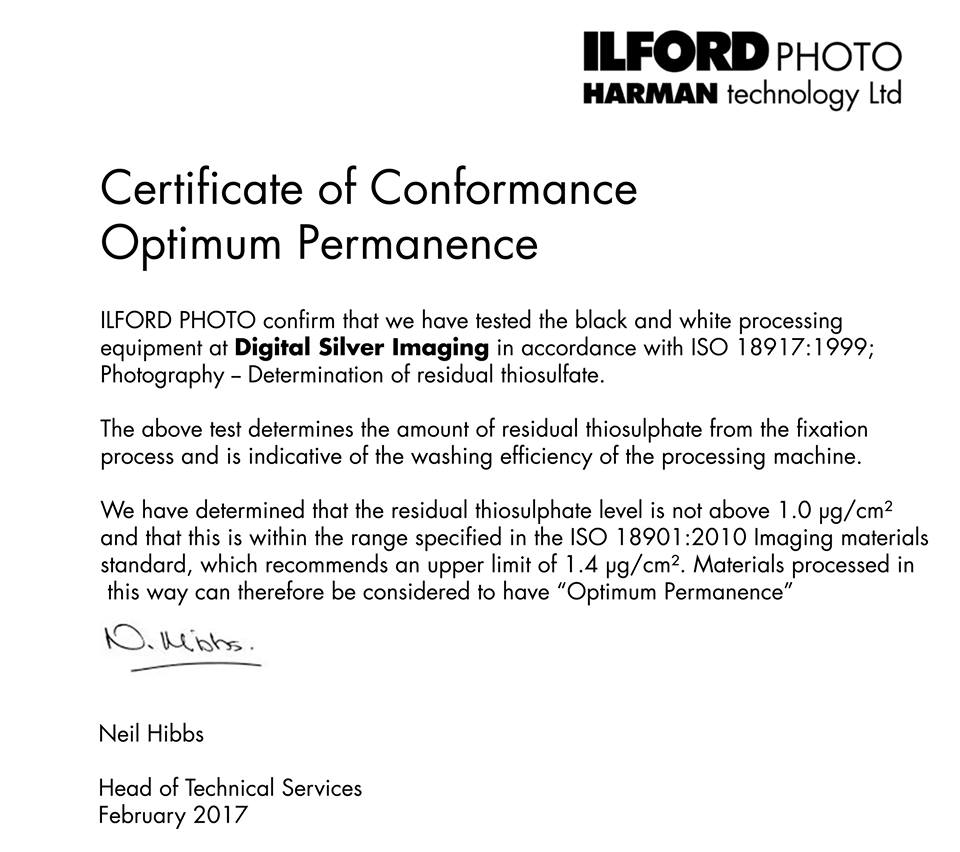
Optimum Permanence Certificate of Conformance - DSI Digital Silver Print©
February 2017, Certificate of Conformance

Optimum Permanence means that Digital Silver Imaging’s Digital Silver Fiber Prints® meet the highest archival print standards. Our custom built black and white print processor produces consistent high quality results every time. We don’t take terms like “Museum Quality” and “Archival” lightly. At Digital Silver Imaging we are constantly evaluating our processes and materials for quality and performance.

When you make a DSI Digital Silver Fiber Print® you can rest easy that “Optimum Permanence” is our standard every day.

What is a “Certificate of Performance ?” To obtain the certificate we submit print samples to the labs at Ilford Photo Harman Technology Ltd. in Great Britain. The lab tests our prints to see how they have been processed and how they will perform over time. Receiving an “Optimum Permanence” rating is simply as good as it gets.

Help spread the word!

Filed Under: General News, News Tagged With: Ilford Harman|Optimum Permanence|Paper Test

B&H Photo Profiles our Switch to Canon Prograf Printers

April 10, 2017 by Digital Silver Imaging

Canon Prograf 1000 Printer
Digital Silver Imaging’s Canon Prograf 1000 printer at work

B&H Photo & Video profiles our switch to Canon Prograf Printers from Epson printers. B&H’s Jill Waterman interviewed our own Eric Luden about the advantages of the Canon Prograf 1000 and Canon Prograf 4000 printers. Jill did a great job in providing B&H readers with real life reasons why the new Canon printers outperform their Epson counterparts.

If you want to know more about why Digital Silver Imaging switched to Canon Prograf printers or are thinking of switching yourself Jill Waterman’s interview is great source material.

Follow this link to the B&H article.

Help spread the word!

Filed Under: DSI Product Information, General News, News Tagged With: b&h|Canon|Jill Waterman|Prograf Printers

2016 Outstanding Year for DSI Customers

February 14, 2017 by Digital Silver Imaging

©Iaritza Menjivar - First Generation
©Iaritza Menjivar

2016 was an outstanding year for Digital Silver Imaging’s customers. This is an incomplete list of some of the projects we printed. We want to thank ALL our clients for allowing us to bring their images to print. The most rewarding part of our job at Digital Silver Imaging is collaborating with such an interesting and talented community of photographers. Thank you for a fun and productive 2016.

Tess Atkinson – Art Colony Exhibition

Dawoud Bey – Early Photographs at the Stephen Daiter Gallery

Mathieu Bitton – Darker Than Blue Exhibition, Leica Gallery LA

Sheila Pree Bright –  Look3 and Candela Gallery in Richmond VA

Debi Cornwall – Gitmo at Home, Gitmo at Play, Gitmo on Sale, UARTS, STUMP, Candela Gallery

Sean Hemmerle – Paris Photo for Julian Sander Gallery

http://www.parisphoto.com/paris/artists/sean-hemmerle

Anthony Hernandez – Paris Photo for Thomas Zander Gallery

Thomas Hoepker – Camera Works Berlin

Kamoinge – Breaking Point Exhibition

Mark Mann – Lucha Libre Exhibition

Iaritza Menjivar – Iaritza is our own Social Media Marketing Assistant. Keep an eye on this talented photographer, she’s a rising star. – First Generation Exhibition, New York Times Lens Blog,

Maciek Nabrdalik – Exhibition Crossing Gallery Harvard

Mark and Eric Norbom – Time’s Hand Exhibition

Stacy Pearsal – Veterans Portrait Project

Mark Peterson – Political Theatre Exhibition

Linda Foard Roberts – A Place in Time, The Ogden Museum

Mark Robinson – New Moon Rises, Smithsonian Museum Exhibition

Ruddy Roye Image
©Ruddy Roye

Ruddy Roye – Look3, When Living is a Protest Steven Kasher Gallery, Time’s Instagram Photographer of the Year 2016 

WPOW – Women Photojournalists of Washington exhibition at the National Geographic for FotoDC

Please let us know
As mentioned, this is an incomplete list. If we made a print that appeared in a show or was purchased by a museum or collection please send us an email, or let us know when you place your print order. We love to feature our customers on our Facebook and Instagram sites.

Help spread the word!

Filed Under: Customer Profile, General News, News Tagged With: customers

  • « Go to Previous Page
  • Page 1
  • Interim pages omitted …
  • Page 4
  • Page 5
  • Page 6
  • Page 7
  • Page 8
  • Interim pages omitted …
  • Page 46
  • Go to Next Page »

Primary Sidebar

Categories

  • Case Studies (9)
  • Customer Profile (14)
  • DSI Product Information (11)
  • DSI-News (15)
  • Events (30)
  • General News (37)
  • General News>Friends of Digital Silver Imaging (4)
  • Interview (3)
  • News (57)
  • Promotion (13)
  • Reviews (3)
  • The Griffin Museum at Digital Silver Imaging (6)
  • Uncategorized (168)
  • Workshops (35)
  • z15 (1)

Digital Silver Imaging

9 Brighton Street
Belmont, MA 02478
617-489-0035
email us
map and directions
shipping info
Hours: 9–5:30 Monday–Friday

  • Facebook
  • Instagram
  • RSS
  • Twitter
  • YouTube

Footer

Digital Silver Imaging

9 Brighton Street
Belmont, MA 02478
617-489-0035
email us
map and directions
shipping info
Hours: 9–5:30 Monday–Friday

Sign Up for DSI-eNews

We'll send you a discount code you can use in your first order and occasional emails to inform you of new services, promotions and events.

  • This field is for validation purposes and should be left unchanged.

Follow DSI

  • Facebook
  • Instagram
  • RSS
  • YouTube

All content © 2026 Digital Silver Imaging · Privacy Policy · powered by WordPress · web design by smallfish-design